
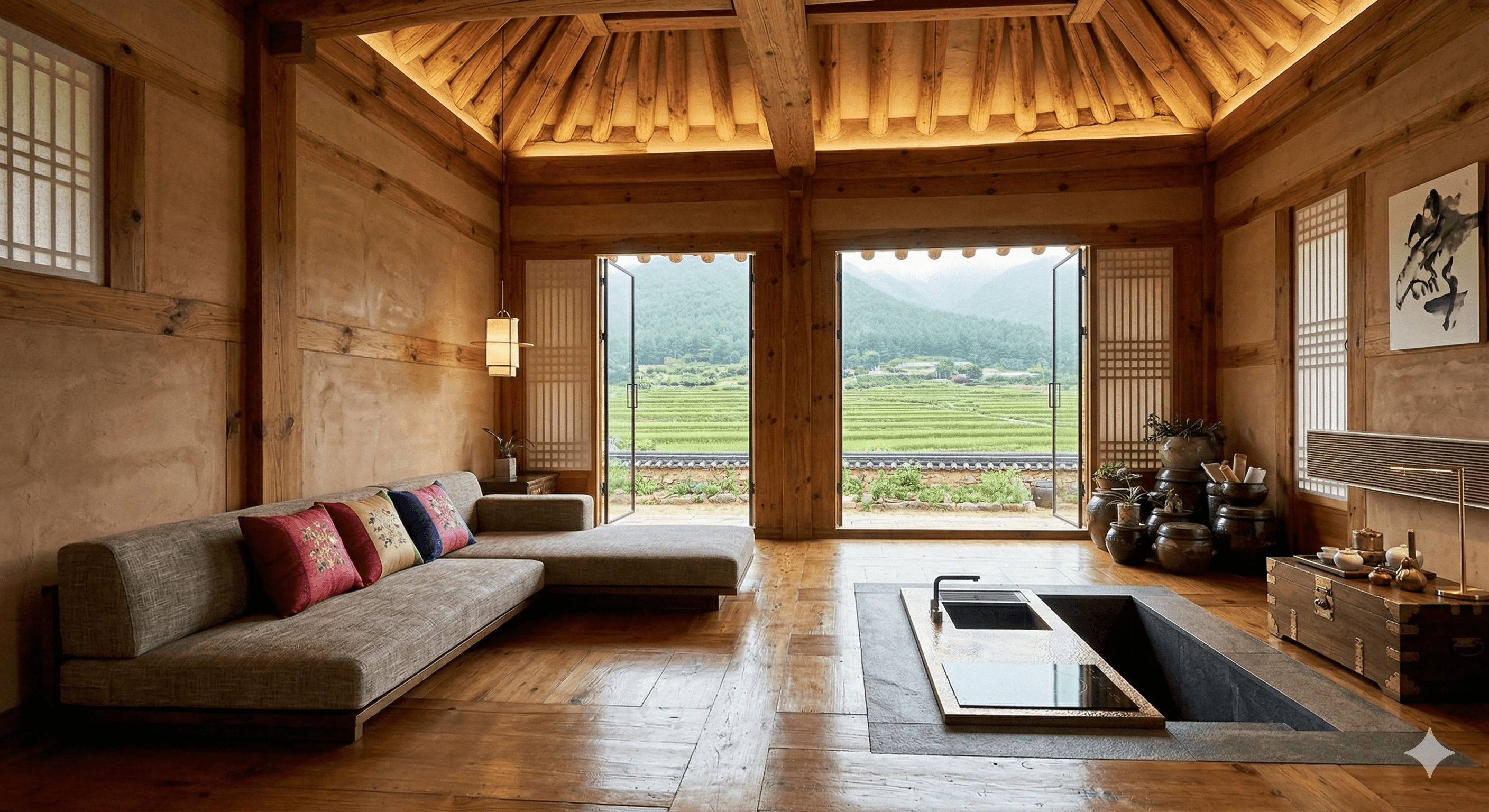
The most common mistake first-time 빈집 buyers make isn't finding the wrong property or getting the legal structure wrong. It's underestimating renovation costs. They see a ₩50M property, budget ₩30M for work, and end up spending ₩80M before the first guest checks in.
We want to give you a realistic picture before you commit.
What 'renovation' actually means for a 빈집
Abandoned rural Korean properties vary enormously in condition. Some have sat empty for 5 years — still structurally sound, needing cosmetic work. Others have been empty for 25 years — roof collapsed, walls damp, utilities non-existent. The renovation scope (and cost) tracks directly with how long the property has been empty and how well it was maintained before that.
Typical cost categories
For a 60–80㎡ hanok targeting the STR market:
- Structural repairs (foundation, walls, roof): ₩10M–₩30M depending on condition
- Roof replacement (traditional clay tile restoration): ₩8M–₩20M
- Electrical rewiring and panel upgrade: ₩3M–₩6M
- Plumbing and bathroom installation: ₩5M–₩12M
- Ondol (underfloor heating) restoration or replacement: ₩4M–₩8M
- Kitchen fit-out: ₩4M–₩10M
- Interior finishing (flooring, walls, doors): ₩6M–₩15M
- Exterior landscaping and entrance: ₩2M–₩5M
- Permits and professional fees: ₩2M–₩4M
Total range: ₩44M–₩110M ($33,000–$82,000 USD) for a full renovation. Budget for the mid-to-high end unless you've had the property professionally assessed.
The grants that reduce your costs
Korea's rural revitalisation grant programme (농촌 활성화) can offset a significant portion of eligible renovation costs — in some cases up to 50% of structural and infrastructure work. The grants are administered at the county (군) level and require advance application before work begins. KoreaRoots submits grant applications as part of our renovation management service.
The 15% buffer rule
Whatever your renovation quote, add 15% for contingency. Every renovation in a property that's been empty for years produces surprises — hidden structural damage, asbestos in older roofing, unexpected permit requirements. Clients who budget for this sleep better. Clients who don't, panic.