
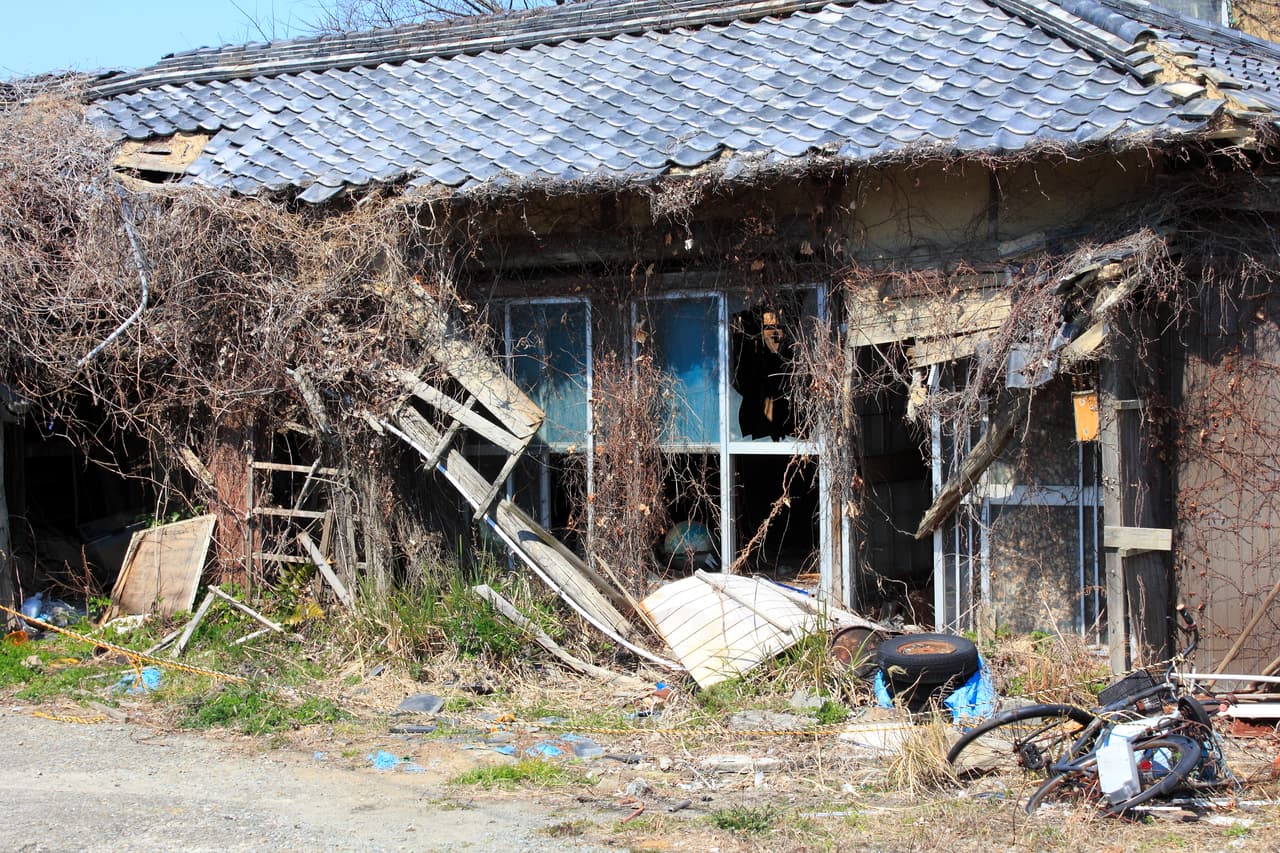
Drive two hours outside of Seoul and the landscape changes fast. Rice paddies, mountain villages, and alongside the beauty — row after row of empty homes. Roofs caved in. Courtyards overgrown. Gates rusted shut. These are 빈집 (bin-jip) — literally, 'empty houses' — and there are over 1.5 million of them scattered across rural South Korea.
Why does Korea have so many abandoned homes?
The short answer is urbanisation. South Korea experienced one of the fastest economic transformations in modern history. Between the 1960s and 1990s, millions of people left farming villages for factory jobs in Seoul, Busan, and Daegu. The homes they left behind weren't sold — they were simply abandoned, often because the land had little market value and the families had no interest in returning.
Today, Korea's rural population continues to shrink. Young people don't want to farm. The elderly who remain are dying. And every year, more homes join the register of 빈집 — unmaintained, untaxed, and slowly collapsing.
What does the Korean government want to do about it?
Quite a lot, actually. The Korean Ministry of Land, Infrastructure and Transport (MOLIT) has been running 빈집 revitalisation programmes since 2017. Municipal governments are required to maintain public registers of abandoned properties, and many offer direct incentives — reduced transfer taxes, renovation grants, and subsidised utilities — to anyone willing to buy and restore them.
Under Korea's Agricultural and Fishing Villages Improvement Act, rural renovation grants (농촌 활성화 지원) can offset up to 50% of eligible restoration costs for qualifying buyers.
Why do Western investors care?
Three reasons. First, the prices are remarkably low — rural 빈집 regularly sell for ₩30–80 million (roughly $22,000–$60,000 USD), far below anything comparable in Japan, Portugal, or Spain. Second, the Korean government's Foreign Investment Promotion Act means qualifying foreign investors can use a 빈집 purchase to anchor a D-8 business investment visa. Third, the rise of Korean cultural exports — K-drama, K-pop, food tourism — has created genuine international demand for authentic rural Korean experiences, which translates directly into short-term rental bookings.
The combination of low entry price, government support, visa eligibility, and growing tourism demand is unusual. Most countries offer one or two of those things. Korea offers all four — which is exactly why KoreaRoots exists.